
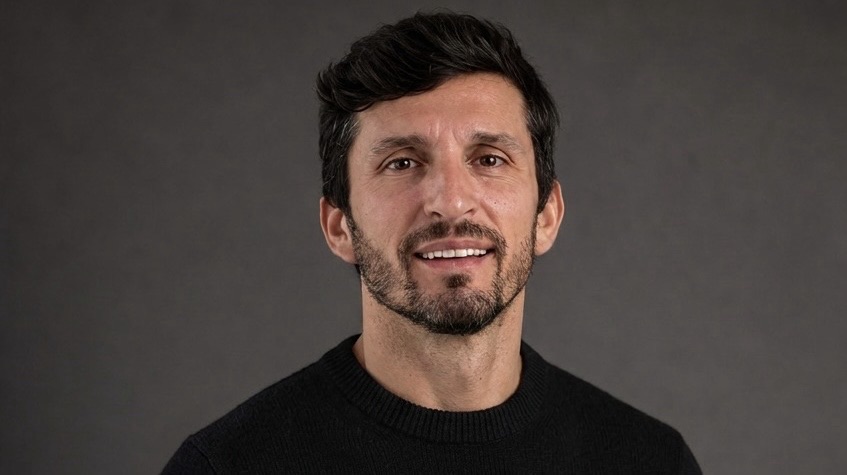
Bruno Pinheiro warns about the AI trap: companies accelerate productivity while automating executive burnout
As companies around the world accelerate investments in artificial intelligence in search of productivity, efficiency, and operational growth, a quieter discussion is beginning to gain traction inside executive boards and strategic corporate environments: in many cases, AI is not reducing pressure, it is amplifying human exhaustion within organizations.
According to Bruno Pinheiro, CEO of Groovia, the biggest mistake companies are making today is treating artificial intelligence merely as a technological tool, without understanding that the transformation requires a complete reorganization of operations, leadership, and corporate structure. Based in Canet Plage, a small beach town on the south coast of France near the Spanish border, with active operations across Brazil and Europe, Pinheiro argues that many organizations are simply layering automation on top of outdated systems, confusing processes, and already overwhelmed leadership teams. “The problem is not AI,” he says. “The problem is using an exponential technology inside a structure that still operates with linear logic.”
His statement summarizes a growing concern among digital transformation experts. Instead of simplifying operations, some companies are creating even more complex environments, accelerating demands, increasing decision overload, and intensifying leadership fatigue. In August 2025, the NANDA project at the Massachusetts Institute of Technology released a study based on hundreds of corporate AI implementations worldwide. The most striking finding was direct: 95% of the analyzed implementations failed to generate measurable returns. According to the study, the issue was not necessarily the technology itself, but the misalignment between executives approving AI investments and the operational teams expected to absorb the changes on a daily basis.

For Pinheiro, this scenario exposes one of the biggest blind spots in today’s technological race. “Many companies believe they are buying productivity,” he says. “But when the structure remains disorganized, AI only accelerates what was already broken.” In practice, poorly defined processes become faster, confusing workflows scale more rapidly, and leaders already operating under pressure are forced to deal with even greater complexity. “If leadership is already overwhelmed, adding AI without reorganizing operations does not create freedom. It creates more pressure.”
The issue becomes even more relevant at a time when mental health has emerged as one of the greatest vulnerabilities in the modern entrepreneurial environment. The “Health and Performance of Entrepreneurs” survey, conducted by Endeavor in partnership with BID Lab, found that 94% of Brazilian startup and scale-up founders have experienced some type of adverse mental health condition. According to Pinheiro, artificial intelligence can intensify this reality when implemented without strategic reorganization. “If you accelerate a misaligned machine, it does not generate more efficiency. It generates more friction,” he explains. “AI can automate productivity, but it can also automate burnout.”
His warning is especially directed toward middle management, professionals who suddenly receive new tools, new targets, and new demands without eliminating outdated processes. According to him, many companies are still operating with structures designed before artificial intelligence, while expecting results compatible with an entirely new business model. “At the beginning of my own intensive AI adoption, I worked more than usual,” he reveals. “Only later did I realize that technology without reorganization increases noise, increases anxiety, and increases pressure on those who were already at their limit.”
In Pinheiro’s view, artificial intelligence is fundamentally changing the traditional logic of corporate work. For decades, companies structured themselves around fixed positions, rigid job descriptions, and highly compartmentalized departments. With the rise of intelligent agents capable of executing analytical, operational, and administrative tasks, this logic is beginning to lose relevance. “Leaders no longer manage only people,” he explains. “Now they must orchestrate people, intelligent agents, and hybrid squads operating simultaneously.”
The work Groovia conducts inside its clients follows a method Pinheiro describes in three sequential phases, always in the same order. Day one is what he calls executive AI literacy, delivered in a single concentrated session. The entire C-level understands what artificial intelligence effectively does, what it cannot do yet, and what it will not do within the horizon of executive decisions. This phase removes the company from speculation and paranoia, placing it in a position to make real choices. Day two is the strategic review. With leadership aligned, Groovia guides the company through a decision very few are making in a structured way: what, within the current operation, will be executed by AI agents, what must remain human for reasons of judgment or risk, and what should simply cease to exist. The third phase is the longest and the most expensive to skip. It is the structural redesign. Teams, processes, governance, indicators, and decision-making models are reorganized around the new division of labor between humans and machines. “Without this third phase,” Pinheiro says, “the literacy and the strategy become slide deck material, and the organization tries to operate AI on top of a structure designed for a world without AI. The result is chaos.”

The principle that organizes the method has a short name Pinheiro repeats in every C-level conversation: AI First, Human Always. The first half means that every task, every process, and every workflow inside the company must be examined with a single question: can this start with an AI agent? Automation becomes the default, not the exception. The second half defends what machines cannot replace. The human always remains as the final layer of decision, judgment, and responsibility. “The industry is selling tools first, exhausted humans later,” Pinheiro says. “I defend the opposite. Agent first, human decision always. The executive stops being an executor and becomes an orchestrator of intelligence.”
According to him, the transformation is not only about individual productivity, but about the entire architecture of business operations. Tasks previously performed exclusively by humans are now being shared with AI agents capable of structuring reports, interpreting data, generating analysis, and accelerating internal workflows. In this new environment, competitive advantage is no longer based solely on operational capacity, but increasingly on strategic clarity, contextual awareness, and decision-making quality. “The executive of the future will not be the one who does more,” says Pinheiro. “It will be the one who can make better decisions in environments with less noise and more context.”
Although he lives in the south of France, Bruno Pinheiro closely follows the Brazilian market and considers the country one of the most relevant laboratories for the next phase of corporate artificial intelligence. According to him, Brazilian companies tend to implement new technologies much faster than the European average. “Brazil has a very interesting characteristic,” he says. “When a company decides to implement something, it implements quickly. That allows us to observe, in real time, what works and what does not.”
According to him, Europe advances with greater institutional caution, regulation, and slower internal processes. Still, the same questions are expected to emerge there in the coming years. “The discussion is no longer whether AI will be adopted. It will. The real question is whether companies are structurally prepared to support what AI is about to accelerate.”
Before leading Groovia, Bruno Pinheiro built his career in digital entrepreneurship, executive education, and projects exploring new models of remote work and geographic freedom. He is the author of the best-selling book Empreender Sem Fronteiras (Entrepreneurship Without Borders) and built nationally recognized initiatives such as Be Academy and Método Nós. In a later phase of his career, he worked on brand strategy and business growth at Ana Couto, contributing to projects involving major companies and senior leadership teams. After stepping away from his previous executive roles in March 2025, Pinheiro completed executive education in strategy at Harvard Business School and in AI implementation at MIT, and used that period to formulate the method that Groovia delivers today.
Today, his work at Groovia connects artificial intelligence, growth strategies, operational redesign, and organizational transformation. For him, the biggest mistake companies make is treating AI as an isolated project owned exclusively by the technology department. “AI is not a new software,” he summarizes. “It is a business redesign project.”
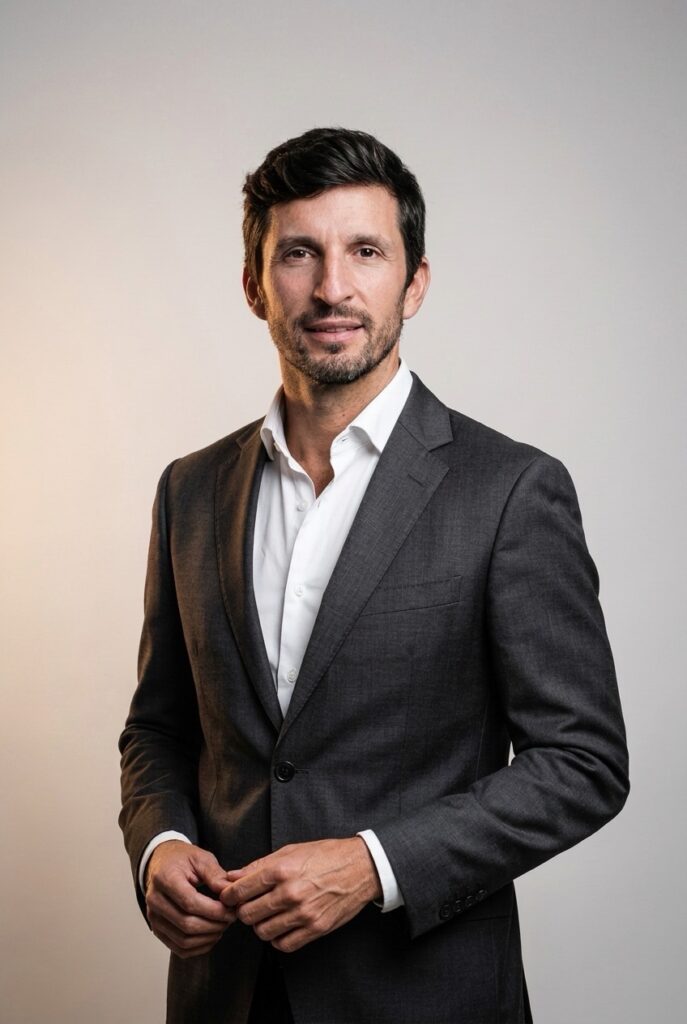
According to Pinheiro, companies that successfully navigate this transition will be those capable of answering three essential questions before accelerating any technological implementation: what must remain human, what can be executed by intelligent agents, and how the company’s structure must evolve so that AI reduces pressure instead of amplifying it.